
Light a Candle in the Evenings for Improved Rest
Sometimes the simplest rituals can have the most meaningful impact on our wellbeing. In the evening, dimming the lights and lighting a candle can gently signal to the body that the day is coming to a close. This soft transition helps support our natural circadian rhythms, making it easier to unwind, fall asleep, and experience more restorative rest—benefiting both our physical health and emotional balance over time.
Many people in wellness and somatic practices prefer warmer, softer lighting because of the way light affects the nervous system and circadian rhythm. While both LEDs and incandescent bulbs can produce warm light, they interact with our bodies a little differently. During the many years I was teaching classes at various locations in Chicago, I noticed that when studios had LED or florescent lighting my eyes would be red and tired after classes.

It often felt like my energy was being depleted even when I was moving and sweating. It slowly became my practice to turn off the lights to teach in dimly lit studios or in soft candlelight alone.
Light Quality and Nervous System Response
Incandescent bulbs produce light through a heated filament, which creates a continuous, warm spectrum of light similar to candlelight or sunset. This softer, amber-toned light tends to feel calming and grounding, which is why it’s often preferred for reducing stimulation, relaxation, or evening wind-down routines.
Some LED lights—especially cooler or very bright ones—can feel more stimulating because they often emit stronger blue light wavelengths and a flickering. Blue light may be helpful during the day because it supports alertness and is stimulating, but in the evening it can signal the brain to stay awake rather than relax.
Circadian Rhythm and Sleep
Our bodies naturally follow a circadian rhythm, an internal clock that responds strongly to light exposure. Bright, cool-toned light tells the brain it is daytime, while dimmer, warmer light signals that it is time to slow down and prepare for sleep.
Because incandescent bulbs naturally produce a warm spectrum with very little blue light, they can feel more supportive for nighttime environments in your like bedrooms or meditation spaces. Many people notice that when they shift to warmer lighting in the evening, it helps the body transition more easily into rest.
The “Feel” of Light in Somatic Practices
In somatic movement, meditation, or nervous system regulation work, lighting can influence how safe and relaxed the body feels. Soft lighting tends to:
Reduce visual stimulation
Encourage slower breathing
Support a sense of calm and inward focus
This is why many wellness professionals use dim, warm lighting or lamps instead of bright overhead lights during restorative practices.
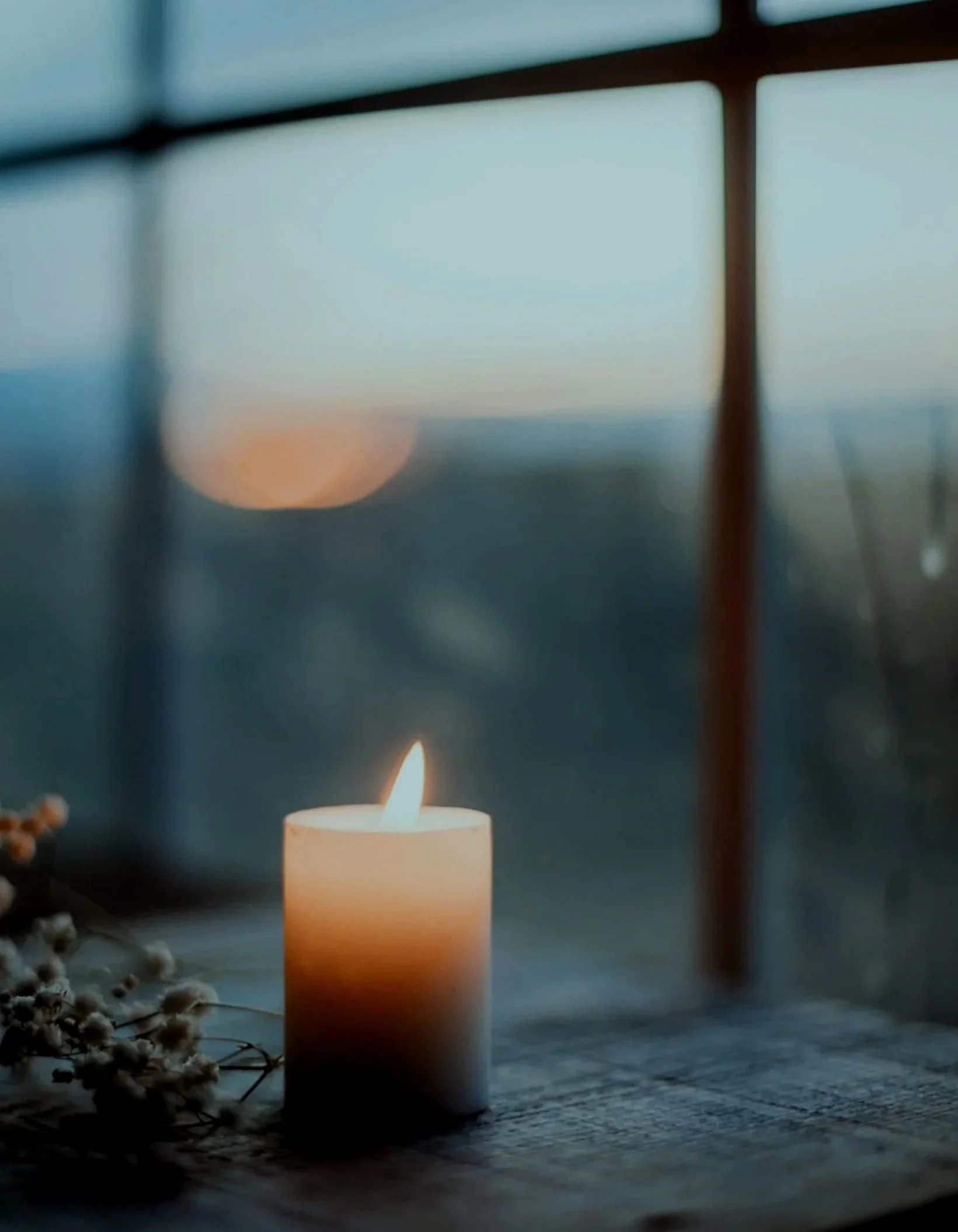
Light a Candle
Another simple way to support the body’s natural wind-down process in the evening is by lighting a candle or using candlelight. The soft, flickering glow of a candle produces a very warm, low level of light that closely resembles the natural light our ancestors experienced after sunset. Because candlelight contains almost no stimulating blue light, it sends a gentle signal to the brain that nighttime is approaching, helping the body shift toward melatonin production and sleep readiness. The slower rhythm of the flame can also have a naturally calming effect on the nervous system, encouraging deeper breathing, relaxation, and a quieter mind.
As you move through your evening, consider letting candlelight become a small but supportive part of your wind-down ritual. The gentle glow invites the body to slow, the breath to soften, and the nervous system to settle. Even lighting a candle in the room you are doing your last activity of your day can be beneficial. When we intentionally create environments that feel calm and nurturing, the body often responds by releasing the day’s tension more easily. Over time, these simple sensory cues—soft light, quiet movement, and slower breathing—can help the body remember how to shift naturally into rest.
LEARN MORE: PODCAST DR. PAUL SALADINO
DEEP DIVE: PODCAST DR. PAUL SALADINO